Empowering Communities for a Sustainable Future
Kent Community Waste Prevention Fund
Kent County Council, with funding provided by the Kent Resource Partnership, has launched the Kent Community Waste Prevention Fund. Join us in reducing waste and promoting sustainability across Kent with our new grant initiative.
Introducing the Kent Community Waste Prevention Fund
The fund has been launched to support community groups, residents’ associations, charities, Community Interest Companies (CICs) and social enterprises in developing innovative ways to prevent or reduce household general waste at a local level.
Groups located across Kent can apply for a grant typically between £500 and £5,000 to deliver projects involving reuse, repair and prevention, targeting a range of household waste streams, including food, textiles, electrical items and general waste. Individuals from successful groups will also have the opportunity to attend fully funded ISEP environmental sustainability courses, delivered by the Low Carbon Kent Training Centre.
This grant is funded by Kent Resource Partnership, a partnership between 12 district councils in Kent, and Kent County Council. To find out more, please visit About the Kent Resource Partnership – Kent County Council

Key Features of the Grant
Explore the essential elements of the Kent Community Waste Prevention Fund.
Eligibility Criteria
Open to community groups, not-for-profits, and local organisations committed to waste reduction and sustainability.
Funding Amounts
Grants available up to £5,000 to support innovative waste prevention projects.
Application Process
Simple and straightforward application process designed to encourage participation from diverse groups.
Project Support
Access to resources and guidance to help maximise the impact of your project.
Frequently Asked Questions
About the Kent Community Waste Prevention Fund
What is the Kent Community Waste Prevention Fund?
The Kent Community Waste Prevention Fund for 2026 to 2027 is provided by Kent County Council and provides support for community organisations to deliver new or expanded, innovative waste prevention and reuse initiatives resulting in a prevention or reduction of household waste. This includes Community Groups, CIC’s, charities and social enterprises.
Grants of up to a maximum of £5,000 per project are available for projects delivered across Kent in 2026 to 2027.
Where is the funding for this project coming from?
The project is funded by the Kent Resource Partnership.
What are the aims of the fund?
The fund will:
- To reduce household and community waste by promoting reuse, repair, and waste prevention behaviours, leading to measurable reductions in residual waste.
- Make a difference to the wider community, and to people’s lives in Kent
How much funding is available and when can we apply for it?
A total of £50,000 is available for Grants of between £500 and £5,000 per project are available for projects delivered across Kent and Medway between 2026 and 2027.
The number of projects that will be awarded will be determined during the evaluation phase. Applicants can apply for funding across multiple projects (assuming they all fit the requirements) but will only be able to receive one grant.
The fund opens on 28th July 2026 and the first funding period closes on 9th October 2026.
Before applying
What is a waste prevention or circular economy project?
Waste prevention includes actions that reduce the amount of waste going to landfill or incineration. This can be created by changing people’s behaviour.
Circular economy projects include reuse, repair and upcycling of items to give them a second life and hence reduce consumption and waste.
What are we looking to support?
Your project should address at least one of five key priority household waste materials; food, furniture, plastics, textiles and/or Waste Electrical, Electronic Equipment (WEEE). Other materials will be considered if there is a strong case; please contact us before completing an application.
Successful applicants will have identified how their project focuses on the prevention or reuse of at least one of these key priority materials. You will also engage with your community and help them to positively change their behaviour towards waste.
Examples of each type of project are:
- Food: Food waste can be prevented by providing people with training, skills, and knowledge to improve their food shopping and storage habits, and by improving portion control. Food composting and refill projects will also be considered.
- Furniture: Unwanted furniture may be suitable for reuse, repair, repurposing or upcycling. These activities can provide opportunities to develop new skills, reduce waste, and support the community.
- Plastics: Projects may reduce dependence on disposal and single use plastics, conserve resources and protect the environment from plastic pollution and greenhouse gas emissions.
- Textiles: Textiles are sometimes thrown away unnecessarily when they are often suitable for repair and reuse. Sewing skills can help with the reuse of clothing and other textiles.
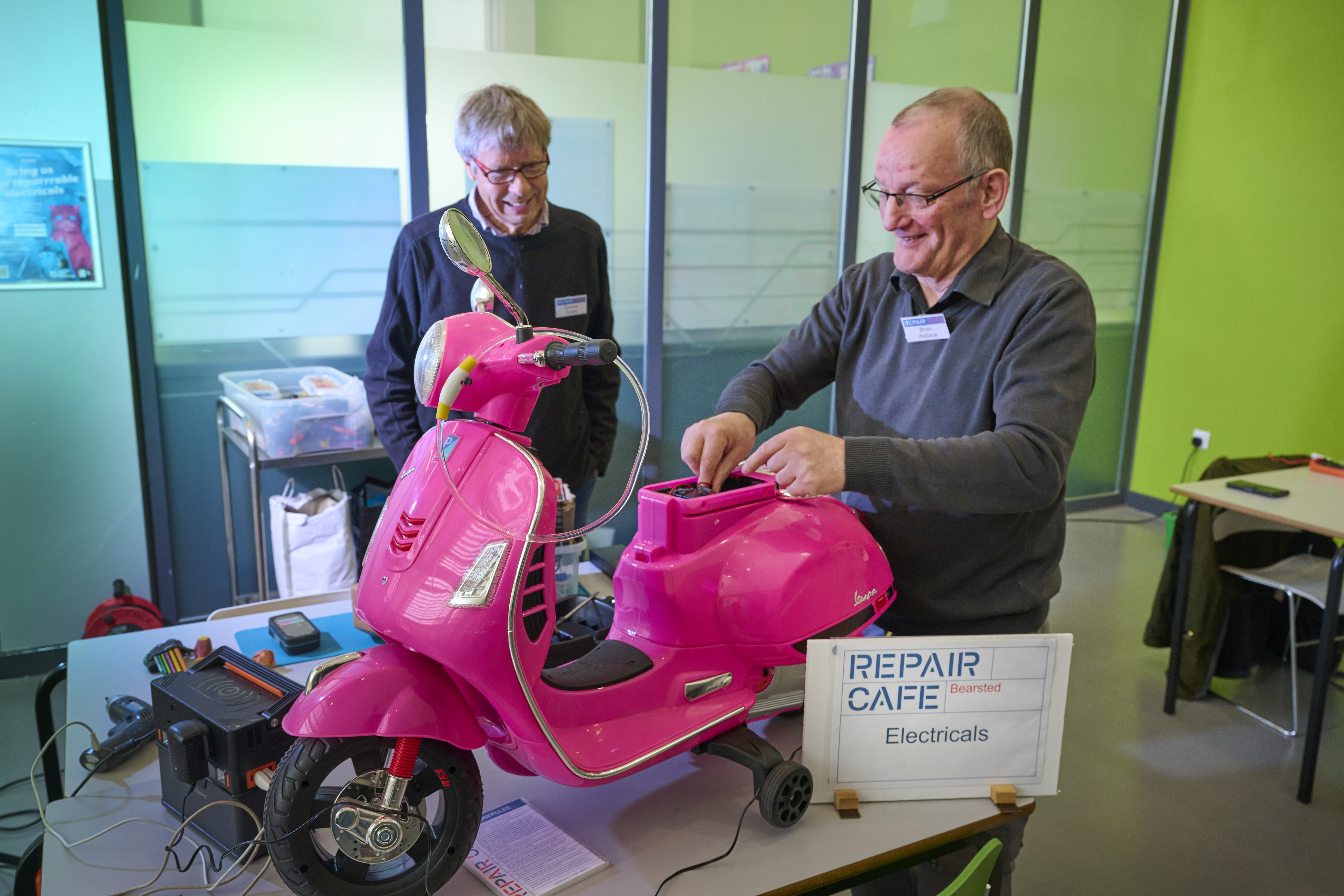
- Waste Electrical, Electronic Equipment (WEEE): WEEE can be defined as electrical and electronic equipment (battery or plug operated), that are broken or unwanted. Many of the electrical items that are thrown away can be recycled, repaired or updated, which helps to save natural resources and reduces damage to the environment.
Who can apply to the fund?
Any legally constituted organisation that operates as a community-based (non-profit making) organisation is eligible to apply. See list of organisations below:
- Community, neighbourhood, or voluntary groups that have an overarching community purpose that reaches beyond its membership.
- Registered charities; you should provide your charity number if applicable.
- Schools, colleges and universities. (Must be in collaboration with a community group)
- Not-for-profit organisations (including social enterprises). This is a registered legal entity that does not make a profit for directors, members, or shareholders.
- Parish councils.
Check the eligibility criteria in the guidance document (see supporting documents section below) to ensure your organisation meets our guidelines. If you do not meet the eligibility criteria, unfortunately we will be unable to accept or process your application.
What are the fund criteria?
The maximum amount awarded to each project will be £5,000, with a minimum of £500 to be awarded. Applications will be ranked and scored based on their:
- demonstrated impact in preventing household waste
- innovation to services and/or introducing new projects to local areas already proven to reduce household waste elsewhere
- ability to be sustained post funding and/or have a legacy
- social and community benefits
- experience in successfully delivering previous projects will also be assessed
Funding will be awarded to the highest scoring applications subject to grant funds being available.
What projects can’t we fund?
The fund will only support new, or the expansion of existing, products and services into other areas. It will not pay for existing activities.
We can’t fund:
- individuals or projects from profit making businesses
- staffing costs (unless it is contracted out to a legitimate organisation, and not one linked in any way to the group applying for the grant)
- core costs that are not specific for the project
- research projects
- activities that any other organisation has a duty to undertake
- projects which deliver activities that are the responsibility of local authorities
- projects that deal with waste from businesses that would not be expected to be collected by local authorities
- costs for activities already provided by other funders
- contribution to endowment fund(s), payment of deficit funding or repayment of loans
Is my organisation eligible?
We will fund a variety of groups such as:
- registered Incorporated Charities. You should provide your charity number if applicable
- not-for-profit organisations. This is a registered legal entity that does not make a profit for directors, members, or shareholders
- community associations, Tenants and Residents groups that have an overarching community purpose that reaches beyond its membership
- environmental, arts and heritage organisations that have certificate of registration, memorandum or articles
- schools, colleges or universities. Your project will benefit your establishment and the wider community and work in partnership with a voluntary or community organisation
Can I apply for more than one Kent Community Waste Prevention Fund project at the same time?
Only one grant can be awarded to an organisation across the funding period, but you can include multiple projects within one grant application, as long as the total grant applied for does not exceed £5,000.
Will we need to monitor the impact of the project?
Yes, you will need to be able to demonstrate the impact of your project. See below for expected benefits that should be recorded as part of your impact evaluation.
- Number of waste prevention (reuse, repair) projects set up
- Amount of CGF investment in the environment
- Amount of income generated in the local community
- Number of training sessions and events
- Quantity and quality of materials diverted away from waste
- Number of people engaged
- Number of volunteer hours
Number of volunteer opportunities created - Social value
- Number of items repaired and reused
- Number of low-income residents supported
You will be expected to complete reporting templates provided to you with the grant agreement.
Do projects need to provide organisational context when putting forward proposals?
Yes. It is helpful to provide organisational information to give context but keep it brief. It is best to focus on your project description.
Is there a date by which projects must have completed?
Funded projects should run for a maximum of 12 months but should ideally be sustained post funding and/or have an on-going impact.
Can schools apply to the Fund?
Yes. If you are a school, college or university, you can apply to the fund to run a waste reduction project. Your project must benefit your establishment and the wider community and work in partnership with a voluntary or community organisation.
Can Tenants Residents Associations (TRAs) apply for funding?
Yes. Applications will be reviewed and scored against the evaluation criteria.
Can council managed event premises apply for funding?
No. As these premises are run by the council, they would not be eligible for funding.
Can community centres apply for funding?
Yes. Applications will be reviewed and scored against the evaluation criteria.
What projects will not be funded?
The fund will only support new, or the expansion of existing, products and services into other areas. It will not pay for ongoing existing activities.
The funding will not be awarded:
- to individuals
- for projects from profit making businesses
- staffing costs (unless it is contracted out to a legitimate organisation, and not one linked in any way to the group applying for the grant)
- to fund core costs that are not specific for the project
- for research projects
- to fund activities that any other organisation has a duty to undertake
- for projects which deliver activities that are the responsibility of local authorities
- for projects that deal with waste from businesses that would not be expected to be collected by local authorities
- to fund the cost of activities already provided by other funders
- for contribution to endowment fund(s), payment of deficit funding or repayment of loans
What area should projects take place?
All projects must be undertaken within Kent and have a reduction or prevention impact on Kent residents’ household waste.
What objectives should a project demonstrate?
- That they will have an impact on the population within the county.
- That they do not duplicate activity in the local area (for example, district, town or parish) that is already taking place.
- Measurable reductions in the amount of household waste, for example, through furniture reused, or food diverted from waste.
- Social benefits (for example, jobs or volunteer posts created and number of residents trained).
- Who the project is likely to directly engage.
- How the project is innovative or new (to the local area).
- The methods used to effect behaviour change.
- Sustainability and/or a degree of ‘legacy’ in terms of waste prevention outcomes. The fund will only support new, or expansion of existing products and services. It will not pay for existing activities.
Why can’t funding be awarded to existing waste prevention initiatives?
The Kent Community Waste Prevention Fund is designed to increase waste prevention opportunities across the county. Because of this, the fund will only support new, or the expansion of existing services, it will not pay for existing activities.
How to apply
How do I apply?
Apply here: Kent Community Waste Prevention Fund Application Form – Fill out form
Make sure you read your application carefully before pressing submit, as you will not be able to return to your application to amend or provide further information once you have submitted.
We recommend that you read through this FAQ section prior to starting to gather information for your application, or the application itself.
When is the application opening date?
Applications will be accepted from 28th July 2026
When is the application closing date?
The closing date is 9th October 2026. We cannot accept applications received after this date.
We aim to make decisions by 6th November 2026 and expect projects to start and claim funding between 30th November 2026 and 12th March 2027. Projects will likely continue beyond this to account for 12 months of delivery time (in most cases).
I can’t access the online application form – can I still apply?
We expect most applications will be via our online application form portal. If you are not able to access this for whatever reason, contact us for further information on how we can support you with your application, for example:
- copies can be posted out
- copies can be emailed
What supporting documents will we need to provide?
Applicants will need to provide the following documents as part of the application:
- A completed application form accessed here. This will include clear proposal of your how your project will meet the objectives above.
- A completed risk assessment of your project and any related activity.
- A completed budget for your project using the Costs Calculator template.
- Copies of current public liability and employers liability insurance certificates, if you have them.
- Audited accounts for the last financial year.
- Evidence of enhanced DBS checks (if working with vulnerable people).
What happens after we submit our application?
Applicants will be notified by email as soon as possible on the outcome of the application once the evaluation period is completed.
When do applicants hear about the outcome of the Fund?
It is our intention to formally advise both successful and unsuccessful applicants by 13th November 2026. However, we do not know how long evaluation will take until we know how many applications we must assess.
Can I get help completing the application?
We have a FAQ section which will be updated regularly, as new questions are received. Contact us if you have any further questions that aren’t answered there.
Is there a word limit to the questions in the application form?
Questions will include detail on word limits. Keep your answers as direct possible. There is an opportunity to upload project plans and other supporting documents which all require evaluation.
How will I know if I have been successful?
You will first receive an offer by email that will confirm how much funding you will be awarded, this may not be the full amount you requested.
As part of our due diligence process, we will need to see documents about your organisation. Failure to provide this supporting information may result in your application not being supported or any funding offer being withdrawn.
Applicants will need to provide the following documents:
- A copy of your governing document, your Constitution, Memorandum, Articles of Association or set of rules.
- A list of your Trustees, Directors, and Management Committee. A minimum of three that are unrelated.
- Details of insurance liability cover, lease agreements and consents (this can be uploaded to the application portal). If you have any questions about the level of insurance liability required, contact us.
- Risk assessment (a template will be available on the application portal).
- A copy bank statement from the last 3 months. This should be clear and not redacted. It should show the name and address of your organisation, account number, sort code and the account balance. Our request for a bank statement falls in line with current data protection requirements. If payments have been made to individuals, you can redact these (this can be uploaded to the application portal when applications are open).
- Quotes for any capital items, for example, community fridge over £300 (this can be uploaded to the application portal).
The award of any funding will require you to enter into a Grant Funding Agreement with Kent County Council. This covers the terms and conditions for your project. Further conditions to your project may be specified which will be included in your Grant Funding Agreement.
How will I know if I have been unsuccessful?
You will receive an email or letter informing you on this occasion that you have not been successful. Where possible we will provide specific feedback on why an application was unsuccessful. Kent County Council’s decision is final, and there is no appeals process. There may, however, be an opportunity to fund previously unsuccessful projects if other successful projects pull out and leave available funding; in this case, we will revert to the scoring system mentioned above and offer to those scoring highest in the system.
How will the funding be paid?
Your funding will be paid into an organisational bank account that has two independent signatories who are not related or live at the same address.
Most grants are paid by electronic transfer (BACS) direct to your bank, which is why we ask for an up-to-date bank statement.
In most cases, one payment will be made in arrears on evidence of eligible spend. If the approved project costs are over £2,500, we can offer a two-stage payment depending on the project scope and timeframe. The first payment will be made in advance and the second payment will be paid on completion.
Will we need to submit any receipts or record what we have spent the money on?
Yes. Proof of spending needs to be submitted. In most cases invoices and receipts, plus bank statements (showing cleared payment) and photographic evidence of spend will be required. If the project involves sessions with community, registers of attendance may be requested. Full guidance will be provided for this by KCC at the start of the project.
Can KCC provide support with communications and promoting our project?
Yes. We can provide limited advice and support with creating a communications plan including help with social media, but we strongly encourage fund recipients to promote their activities.
If successful, what sort of reporting do I need to do?
At the end of your project, you will be required to provide an end of project report (a template will be provided to successful applicants if required) no later than ……. However, this can be produced earlier depending on your project scope and timeframe. It is advisable to work on this report during your project to ensure data is correct.
Supporting Documents
Apply for the Kent Community Waste Prevention Fund
Join us in making a difference by applying for the Kent Community Waste Prevention Fund. This grant supports innovative projects aimed at reducing waste and promoting sustainability in our community. Don’t miss the opportunity to contribute to a greener Kent. For more details, reach out to us today!